Column · @mystumpgrindingdelandzone
Expert Stump Grinding DeLand Services: What to Expect
Why Stump Grinding Matters After Tree Removal
When a tree comes down on a property in DeLand, the work is only half done. The stump left behind is more than just an eyesore. It can become a hazard for lawn mowers, a tripping risk for kids and pets, and a magnet for pests like termites and ants. Many homeowners assume they can dig out the stump with a shovel and some elbow grease, but that rarely works for mature trees. The root system of a live oak or a longleaf pine can extend far beyond what you see above ground. That is where professional stump grinding DeLand services come into play.
I have spent years working with tree crews across Florida, and I can tell you that stump grinding is one of those jobs where the right equipment makes all the difference. A stump grinder is a powerful machine with sharp grinder teeth that chew through wood and roots in minutes. Without it, you might spend days digging, chopping with a chainsaw, and still end up with a mess. In DeLand, where sandy soil mixes with clay in some neighborhoods, the approach has to be tailored to the specific site.
Understanding the Stump and Its Root System
Before any grinding starts, a site assessment is essential. An arborist or experienced operator will look at the tree stump, check for nearby utility lines, and evaluate the surrounding landscape. In older parts of DeLand, you might find stumps from trees that were removed decades ago, with roots that have woven into sprinkler systems or grown around underground pipes. Ignoring those details can lead to costly repairs later.
The root system of a tree is not a mirror image of its canopy. Some roots grow deep, but most spread horizontally just under the surface. A stump grinder can typically go down six to twelve inches, sometimes deeper if the job requires it. That is usually enough to remove the bulk of the stump and the main lateral roots. For a full excavation of every root, you would need heavy machinery and a lot of digging, which most residential yards cannot handle without tearing up the entire lawn.
There is a trade-off here. Grinding leaves the deeper roots in the ground to decay naturally over time. That is fine for most properties. The surface is level, you can plant grass or a new shrub over it, and the gradual decomposition adds organic matter to the soil. If you plan to build a structure or pour concrete in that spot, you might need full removal. But for a typical yard in a DeLand neighborhood, stump grinding DeLand is the practical choice.
How the Grinding Process Works
A stump grinder is a compact but heavy machine. It has a rotating disc or drum fitted with carbide grinder teeth that chip away at the wood. The operator guides the machine over the stump, lowering the cutting wheel bit by bit. It is loud work, and safety goggles are a must because wood chips and debris fly in every direction. Most crews also wear hearing protection and heavy gloves.
The grinder reduces the stump to a pile of mulch and sawdust. That material can be left on site as a natural fill, or it can be hauled away if you prefer. Some people like to use the mulch in flower beds, but I always advise caution. The fresh wood chips can tie up nitrogen in the soil as they break down, so it is better to compost them first or mix them with green waste. A chipper is sometimes used for branches and smaller debris from the original tree removal, but for the stump itself, the grinder is the only tool that does the job efficiently.
One question I get often is whether the grinder can handle roots that are visible above the lawn. The answer is yes, but it takes a careful hand. Surface roots can be ground down, but the operator needs to avoid damaging irrigation lines or the foundation of a nearby patio. That is why a site assessment before the job is not just a formality. It is a chance to mark buried cables, mark sprinkler heads, and plan the safest path for the grinder.
Permits and Local Regulations in DeLand
DeLand has its own set of rules when it comes to tree work. Depending on the size and species of the tree that was removed, a permit might have been required for the removal itself. For stump grinding, the rules are usually less strict, but it is wise to check with the city before you schedule the work. Some neighborhoods have homeowners' association guidelines that limit how deep you can grind or what you can do with the leftover mulch.
In my experience, the best approach is to work with a local company that knows the area. They will already be familiar with the permitting process and can advise you on what is needed. They also understand the soil conditions in different parts of DeLand, from the sandy loam near Lake George to the heavier clay closer to downtown. That local knowledge saves time and prevents surprises.
Emergency Situations and Stump Hazards
Sometimes tree removal happens in a hurry. A storm blows through, a limb falls on a car, or a diseased tree starts to lean toward the house. In those cases, emergency tree removal is the priority. The stump often gets left behind until things settle down. But a fresh stump in a yard after a storm can be a real problem. It is a tripping hazard for anyone walking through the yard to assess damage, and it can snag lawn equipment when you finally get back to mowing.
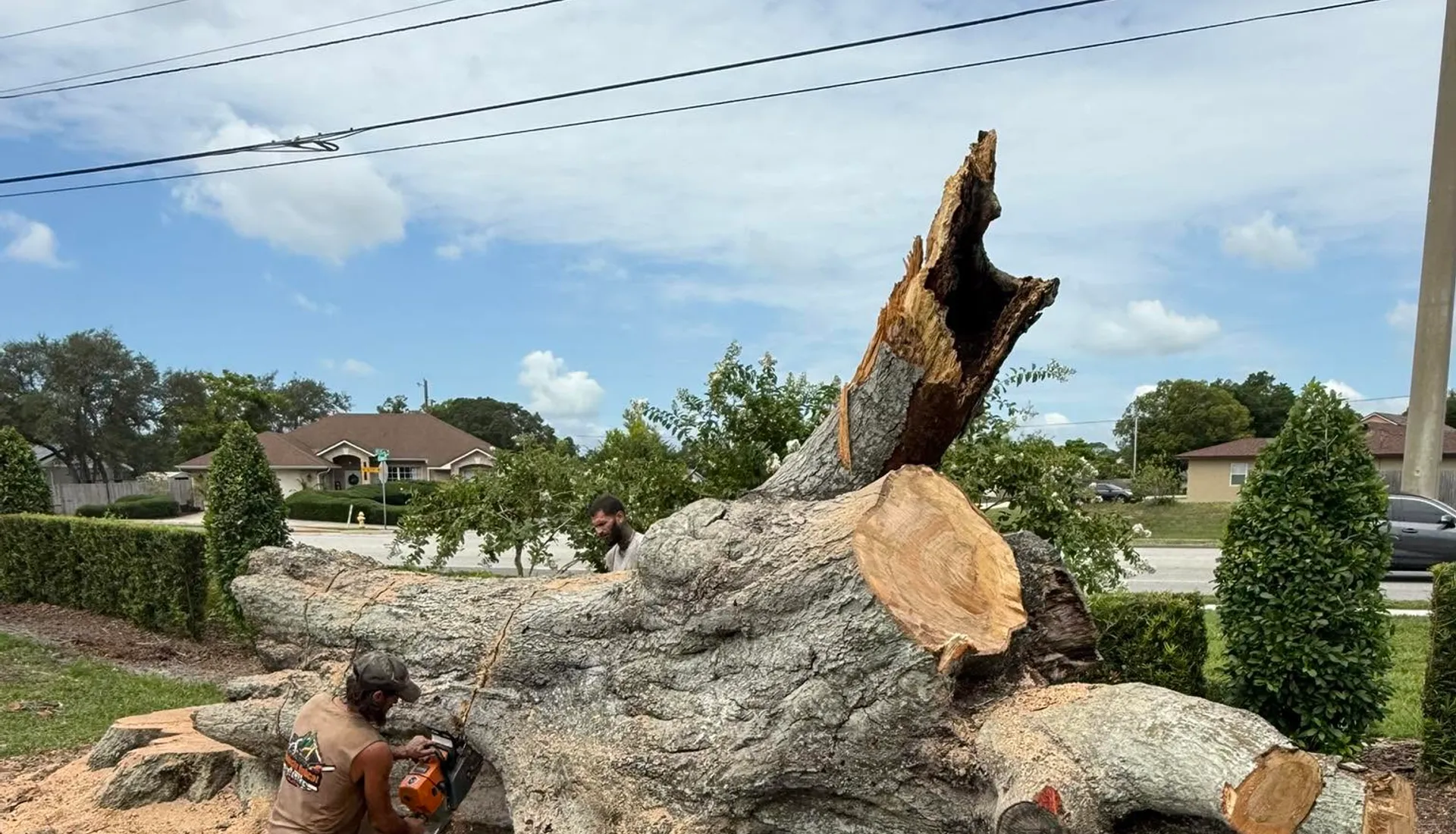
I have seen homeowners in DeLand wait months to grind a stump after an emergency removal, only to find that the roots have started to sprout new shoots. That is especially common with certain species like Chinese tallow or camphor trees. Grinding the stump quickly removes the source of those regrowths and lets the landscape recover faster. If you have just had an emergency removal, it is worth asking the tree service if they can handle the stump grinding DeLand at the same time. It saves you a second appointment and keeps the crew and equipment on site.
Choosing Between Grinding and Excavation
Every stump job comes down to a choice between grinding and full excavation. Excavation means digging out the entire stump and root ball with a shovel or a mini excavator. It leaves a big hole that needs to be filled with topsoil, and it can disturb the surrounding lawn badly. But it removes every bit of wood and root, so there is zero chance of regrowth or settling later.
Grinding, on the other hand, is faster, cheaper, and less invasive. The resulting mulch fills the hole naturally, and after a few weeks you can seed or sod over the area. The trade-off is that some roots remain underground. For 90 percent of the residential jobs I have seen in DeLand, grinding is the better option. It is only when you are planning a major landscape renovation or building a structure that excavation makes sense.
Preparing Your Yard for Stump Grinding
If you have a stump that needs grinding, there are a few things you can do to make the job go smoothly. Clear away any furniture, toys, or garden decorations from the area. Mark any sprinkler heads or irrigation lines that are close to the stump. If the stump is near a fence or a wall, let the operator know so they can plan their approach. The grinder needs room to maneuver, and a tight corner can be tricky.
Also, think about what you want to do with the debris. If you want the mulch removed, the crew can bag it or haul it away for an extra fee. If you want to keep it, they can spread it around the yard or leave it in a pile. Just be aware that fresh wood mulch from a grinder can contain pieces of bark and small twigs, so it is not as fine as store-bought mulch. It works well as a path cover or a base for a compost pile.
Aftercare for the Ground
Once the grinder has done its work, the spot where the stump stood will be a mix of soil and wood chips. Over the next few months, that area will settle as the remaining roots decompose. You can speed up the process by adding a little nitrogen fertilizer, which helps the microbes break down the wood. If you plan to plant grass, wait until the ground has settled and then add a layer of topsoil before seeding.
Some people worry that the wood chips will attract termites or other pests. In practice, the risk is low if the mulch is spread thin and not piled against the house. The grinder teeth create small chips that dry out quickly, and termites prefer larger, undisturbed pieces of wood. As long as you do not let the mulch sit in a damp heap for months, it will be fine.
Final Thoughts on Stump Grinding in DeLand
Stump grinding is one of those services that homeowners in DeLand do not think about until they need it. Once the tree is down, the stump becomes an obstacle that limits what you can do with your yard. A professional stump grinder can remove that obstacle in a couple of hours, leaving you with a clean, level surface and a pile of useful mulch. The key is to hire someone who knows the local conditions, has the right equipment, and takes the time to do a proper site assessment. That is how you get a result that looks good and lasts.